The Truth About Teeth Whitening Results
If you’ve ever stared at a celebrity smile and wondered whether your teeth could ever look that bright, you’re not alone. Teeth whitening is one of the most popular cosmetic dental treatments in the world — but how white can teeth realistically get? The answer might surprise you.
The Natural Colour of Teeth: Your Starting Point Matters
Before diving into whitening potential, it helps to understand what gives teeth their colour in the first place. Teeth are not naturally pure white. The outer layer — enamel — is semi-translucent, and the layer beneath it, called dentin, is naturally yellowish. The combination of these two layers gives each person a unique baseline tooth colour.
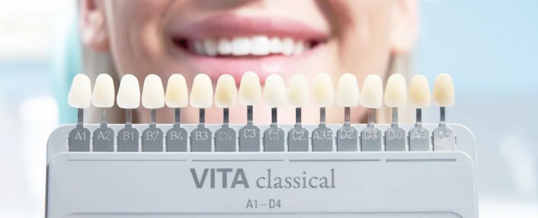
Dentists use shade guides to measure tooth colour, with the most common being the VITA Classic Shade Guide. Shades range from A1 (light yellow-grey) through to C4 (dark grey), with most untreated adult teeth falling somewhere in the A2–B3 range.
This baseline is important because whitening treatments work by lifting stains — not by fundamentally altering the colour of your enamel or dentin. That distinction is key to understanding how white your teeth can actually get.

What Teeth Whitening Actually Does
Teeth whitening products — whether professional treatments or over-the-counter options — use peroxide-based agents (typically hydrogen peroxide or carbamide peroxide) to break down stain molecules that have built up on and within the tooth structure.
There are two types of stains:
- Extrinsic stains — Surface stains caused by coffee, tea, red wine, smoking, and certain foods. These respond very well to whitening.
- Intrinsic stains — Deeper discolouration within the dentin, often caused by ageing, certain medications (like tetracycline), fluorosis, or trauma. These are harder to treat and may not respond fully to whitening alone.
The whiter your teeth can get depends largely on which type of staining you’re dealing with.
How Many Shades Whiter Can You Go?
This is the question everyone wants answered. The honest response: most people can expect to whiten their teeth by 2 to 9 shades, depending on the method used and the nature of their staining.
Here’s a general breakdown:
| Treatment Type | Expected Whitening | Duration of Results |
|---|---|---|
| Whitening toothpaste | 1–2 shades | Ongoing with use |
| Over-the-counter strips | 2–4 shades | 3–6 months |
| Custom take-home trays (dentist) | 4–8 shades | 6–12 months |
| In-office professional whitening | 6–10 shades | 1–3 years |
Professional treatments use higher concentrations of peroxide and often combine heat or LED light to accelerate the process, which is why they tend to deliver more dramatic results.
Is There a “Maximum White” for Teeth?
Yes — and it’s defined by your natural tooth structure.
No whitening treatment can make your teeth whiter than your enamel will allow. Once all the staining has been lifted, you’ve reached your personal “whitening ceiling.” Continuing to apply bleaching agents beyond this point won’t produce whiter results and can actually cause tooth sensitivity and enamel damage.
Most dental professionals agree that achieving A1 on the VITA shade guide is a realistic and healthy target for the majority of patients. Going beyond this naturally occurring shade typically requires cosmetic options like veneers or crowns, which are covered with porcelain in a custom-selected shade.
Factors That Affect How White Your Teeth Can Get
1. Your Natural Tooth Shade
People with naturally darker or more yellow teeth may see dramatic changes with whitening. Those who already have lighter teeth may notice less visible improvement — though they’re starting from a better baseline.
2. Age
As we age, enamel thins and dentin darkens, which causes teeth to appear more yellow. Younger patients often respond more dramatically to whitening treatments.
3. Type and Depth of Staining
Surface stains from lifestyle habits (coffee, wine, smoking) are the most responsive to whitening. Deep intrinsic stains — particularly those caused by tetracycline antibiotics — are notoriously difficult to treat and may only partially respond to even professional treatments.
4. The Whitening Method Used
Higher-concentration professional treatments will always outperform lower-concentration over-the-counter options. Consistency also matters — take-home trays used regularly over several weeks can produce results rivalling a single in-office session.
5. Dental Restorations
Crowns, veneers, bonding, and fillings do not respond to whitening agents. If you have visible restorations, whitening your natural teeth may create a mismatch in colour. Always consult your dentist before beginning a whitening regimen.
Professional vs. At-Home Whitening: Which Gets Teeth Whiter?
For sheer whitening power, professional in-office treatments win. Systems like Zoom, Enlighten, and BriteSmile use high-concentration peroxide gels (often 25–40% hydrogen peroxide) activated by specially calibrated lights, delivering noticeable results in a single appointment.
However, dentist-prescribed take-home trays have been shown in clinical research to produce excellent long-term outcomes — often matching or exceeding in-office results when used consistently over 2–4 weeks. The lower concentration (typically 10–22% carbamide peroxide) used over a longer period is gentler on enamel and can be highly effective for stubborn staining.
Over-the-counter products like whitening strips and LED kits can produce real results, but with lower active concentrations, they’re best suited for mild staining or as a maintenance tool after professional treatment.
The “Hollywood White” Question: Is It Real or Edited?
The ultra-bright, almost luminous smiles you see on celebrities and in advertising are often a combination of:
- Professional whitening — yes, these do look genuinely bright in person
- Porcelain veneers — a thin shell of porcelain bonded to the front of the tooth, custom-shaded to any colour the patient desires
- Photography and editing — lighting, filters, and retouching frequently enhance the appearance of teeth in media
So while professional whitening can produce genuinely stunning results, the very whitest smiles you see in magazines are almost certainly veneered — or digitally enhanced.
Maintaining Your Results: How to Stay White Longer
Whitening results are not permanent, but with the right habits you can significantly extend how long they last:
- Limit staining foods and drinks — coffee, tea, red wine, and dark sauces are the main culprits
- Rinse your mouth after consuming staining substances — even water helps
- Use a whitening toothpaste for gentle daily maintenance
- Avoid smoking — tobacco is one of the fastest ways to reverse whitening results
- Schedule top-up treatments — whether a brief in-office session or a week of take-home tray use every 6–12 months
- Stay on top of dental hygiene — clean teeth whiten more effectively and stay whiter longer
When Whitening Isn’t the Right Answer
Whitening isn’t suitable for everyone or every situation. It’s worth consulting a dental professional if you:
- Have significant intrinsic staining (especially tetracycline staining)
- Have crowns, veneers, or bonding on visible front teeth
- Are pregnant or breastfeeding
- Have active tooth decay or gum disease
- Experience significant tooth sensitivity
In these cases, alternative cosmetic options like composite bonding or porcelain veneers may deliver better results.
The Bottom Line: How White Can Teeth Really Get?
Most people can achieve meaningfully whiter teeth — often dramatically so — with the right treatment. Realistically, professional whitening can lift teeth 6 to 10 shades and bring most patients to a bright, natural-looking white that’s well within the healthy end of dental shade guides.
True “blinding white” smiles beyond what natural enamel allows require veneers — but the good news is that for the majority of people, professional whitening alone delivers results that are genuinely transformative.
The key is starting with a professional consultation so you understand your baseline, your stain type, and the most effective path to your whitest possible smile.
Professional In-Clinic Teeth Whitening Auckland
iSmile Professional In-Clinic Teeth Whitening Auckland offers the most developed, safe and gentle teeth whitening system available on the market today! iSmile Auckland Teeth Whitening Practitioners are fully qualified and registered members of the New Zealand Cosmetic Teeth Whitening Association (NZCTWA). Check out iSmile Teeth whitening treatment options.
Contact us today to schedule an appointment!
Learn more about Professional In Clinic Teeth Whitening Auckland
Follow iSmile on Instagram and Facebook
Go straight to iSmile Online Bookings
ShareJUN
2026
About the Author: